

One in five Indian women of reproductive age lives with Polycystic Ovary Syndrome — commonly called PCOS or PCOD. Yet a large number of them spend months, sometimes years, attributing their symptoms to stress, diet, or simply “that’s just how my body is,” before consulting a gynac.
If your periods are irregular, you have been gaining weight without a clear reason, or you have been noticing unusual hair growth or skin changes — this guide is for you. We break down what PCOS actually feels like, which symptoms need medical attention, and how to find the right gynecologist for PCOS treatment in India.
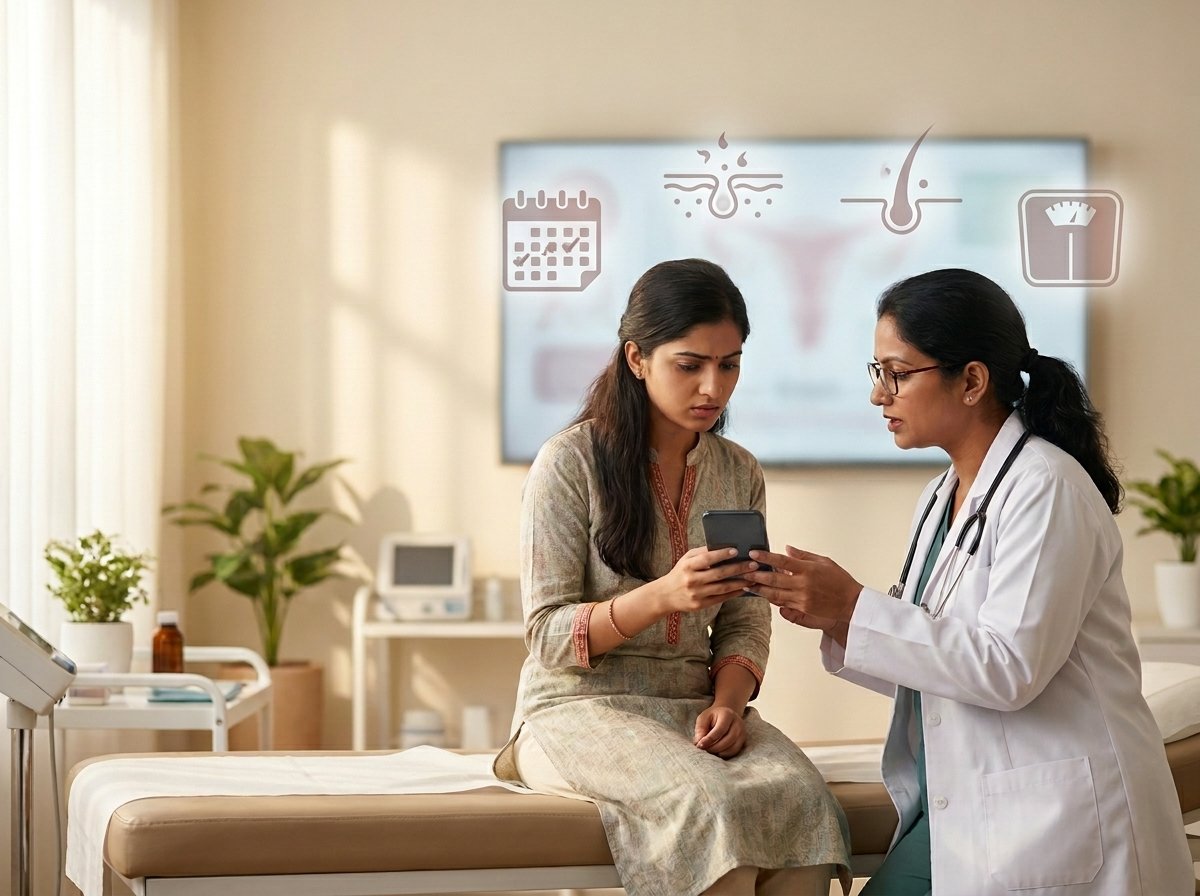
Key Takeaways
- PCOS is Extremely Common in India: Estimates suggest 1 in 5 women in India are affected, yet many go undiagnosed for years due to lack of awareness.
- Symptoms Vary Widely: PCOS does not look the same for everyone — some women have irregular periods, others have normal cycles but other symptoms. Do not self-rule it out.
- Early Consultation Matters: PCOS left unmanaged can affect fertility, metabolism, and long-term hormonal health. Seeing a gynac early makes management significantly easier.
- You Do Not Need to Manage It Alone: GynecHub connects you with experienced gynacs who specialise in PCOS and hormonal health across Indian cities.
What Is PCOS — And Why Is It So Common in India?
PCOS (Polycystic Ovary Syndrome) is a hormonal condition that affects how the ovaries function. The term “polycystic” refers to the appearance of multiple small follicles on the ovaries — but not every woman with PCOS will have cysts, and not everyone with ovarian cysts has PCOS. It is primarily a hormonal and metabolic disorder.
In India, PCOS prevalence is notably high — studies published in the Journal of Human Reproductive Sciences have found rates between 9.13% and 22.5% across different populations, with urban women and women in certain regions showing higher numbers. Factors like dietary changes, sedentary lifestyles, chronic stress, and genetic predisposition all contribute.
The reason so many Indian women go undiagnosed is simple: the symptoms of PCOS overlap heavily with things we are often told to “manage at home” — irregular periods blamed on stress, weight gain attributed to lifestyle, skin issues managed with topical treatments. A gynac is often the last stop rather than the first.
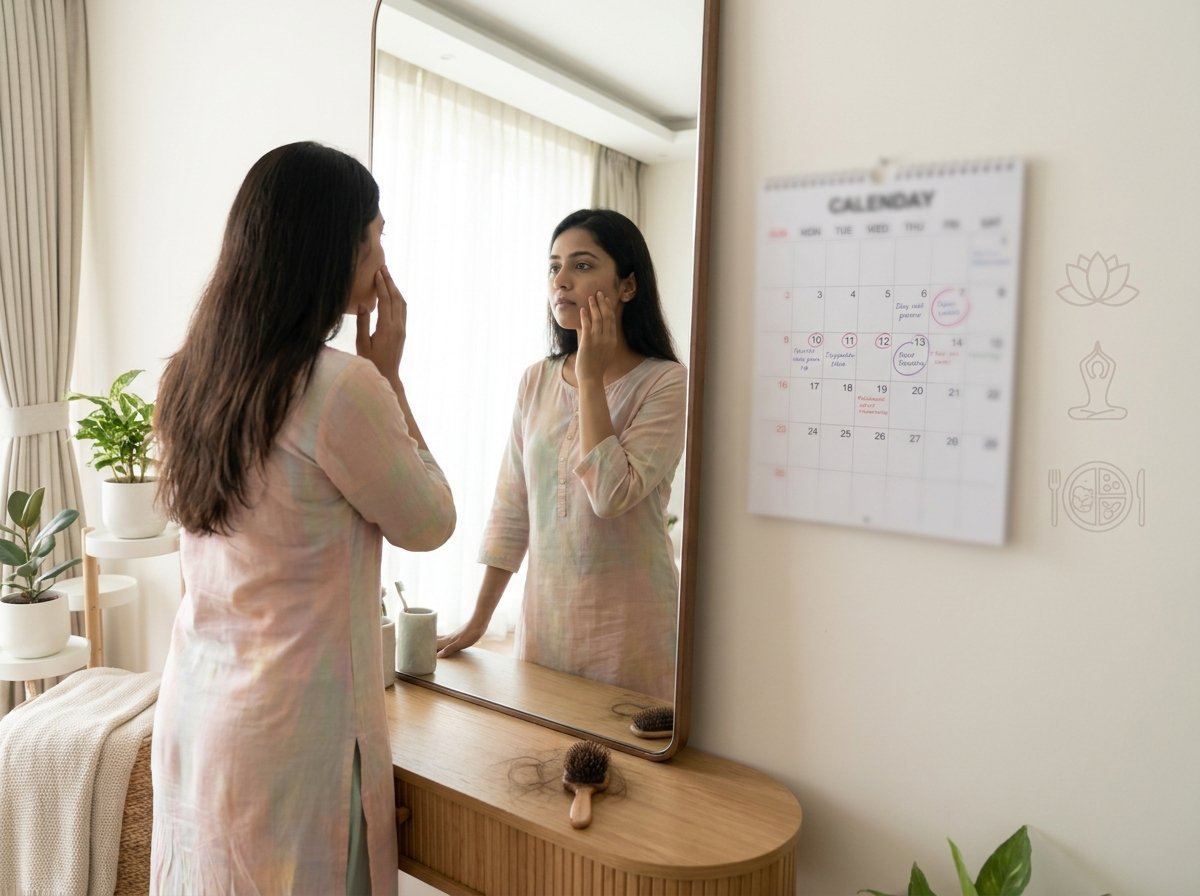
Common PCOS Symptoms: What to Watch For
PCOS presents differently in different women. Here are the most commonly reported symptoms in the Indian context:
1. Irregular or Missed Periods
This is the most classic sign. Cycles that come every 35–90 days, or fewer than 8 periods a year, are a strong indicator. Some women with PCOS have very light periods; others experience heavy bleeding.
2. Unexplained Weight Gain — Especially Around the Waist
PCOS is associated with insulin resistance, which makes it easier to gain weight and harder to lose it — especially around the abdomen. This is not simply a “lifestyle” problem.
3. Excessive Hair Growth (Hirsutism)
Unwanted hair on the face, chin, upper lip, chest, or back — caused by elevated androgen (male hormone) levels. In India, this is often attributed to heredity rather than investigated.
4. Hair Thinning or Hair Fall
The same androgen imbalance that causes facial hair can cause scalp hair to thin — similar to male-pattern hair loss. This is called androgenic alopecia.
5. Acne — Particularly Around the Jaw and Chin
Hormonal acne linked to PCOS tends to appear along the jawline, chin, and lower cheeks, and is often resistant to standard skincare or antibiotic treatments.
6. Darkening of Skin (Acanthosis Nigricans)
Dark, velvety patches around the neck, armpits, or groin can indicate insulin resistance — a common component of PCOS.
6. Darkening of Skin (Acanthosis Nigricans)
Dark, velvety patches around the neck, armpits, or groin can indicate insulin resistance — a common component of PCOS.
7. Difficulty Getting Pregnant
PCOS is one of the leading causes of infertility in women of reproductive age. Irregular ovulation or anovulation (no ovulation) makes conception harder without targeted treatment.
8. Mood Changes, Anxiety, or Fatigue
Hormonal fluctuations affect mood significantly. Research increasingly links PCOS to higher rates of anxiety and depression in affected women.
Important: You do not need to have all of these symptoms to have PCOS. A formal diagnosis typically requires an ultrasound, blood hormone panel, and clinical assessment by a gynecologist. Do not self-diagnose — and equally, do not dismiss your symptoms because they seem "mild."
PCOS vs PCOD: Are They the Same?
You will often hear both terms used interchangeably in India — and while they are related, there is a distinction. PCOD (Polycystic Ovarian Disease) refers specifically to the physical presence of multiple cysts on the ovaries. PCOS (Syndrome) is broader, covering the full hormonal and metabolic picture even when cysts may not be clearly visible on ultrasound.
Practically speaking, both conditions are managed similarly and require the guidance of a qualified gynac. The terminology matters less than getting the right assessment done.
| Factor | PCOS | PCOD |
|---|---|---|
| Definition | Hormonal + metabolic syndrome | Ovarian cyst disorder |
| Diagnosis criteria | 2 of 3: irregular cycles, high androgens, polycystic ovaries | Presence of multiple cysts on ultrasound |
| Impact on fertility | Moderate to significant | Mild to moderate |
| Reversibility | Manageable, not fully reversible | Often reversible with lifestyle changes |
| Who to see | Gynac with hormonal health expertise | General Gynaecologist |
When Should You See a Gynac for PCOS?
The straightforward answer: sooner than most women do. But here are specific triggers that should prompt you to book a consultation without delay:
- Your periods have been irregular for more than 3 months
- You have been trying to conceive for 6 months or more without success
- You are experiencing sudden or significant hair loss
- Acne is not responding to standard treatments
- You notice new or increasing facial/body hair
- You have gained weight significantly around the abdomen despite no major change in diet
- You feel unusually tired, anxious, or emotionally low — and it has been consistent
"PCOS is not just a period problem. It is a hormonal condition that benefits enormously from early, guided care." — GynecHub
What Does PCOS Treatment Look Like in India?
The good news: PCOS is very manageable. Most gynacs treating PCOS in India will begin with a thorough assessment — blood tests for hormone levels (LH, FSH, testosterone, insulin, thyroid), a pelvic ultrasound, and a clinical review of your cycle history.
Treatment is typically personalised and may include:
- Lifestyle guidance: Diet modifications and exercise — often the most powerful first step, particularly for insulin-resistant PCOS
- Hormonal medication: Oral contraceptive pills (OCPs) are commonly prescribed to regulate periods and reduce androgen symptoms
- Insulin-sensitising medication: Metformin is frequently used for metabolic PCOS
- Fertility support: If conception is the goal, ovulation induction through medication (Clomiphene, Letrozole) is often the starting point
- Symptom-specific care: Dermatology referrals for acne or hair concerns may complement gynaecological treatment
Every woman’s PCOS is different — which is why finding a gynac who listens carefully and creates a plan specific to you matters so much.
Finding the Right Gynac for PCOS in India
Not all gynacs have the same depth of experience with hormonal health. When looking for a PCOS specialist gynac, look for someone who:
- Has explicit experience with PCOS and hormonal health management
- Takes the time to understand your full symptom picture — not just your periods
- Discusses lifestyle and long-term management, not just immediate medication
- Is accessible for follow-up questions as your treatment evolves
GynecHub’s doctor directory allows you to filter by concern — including PCOS and hormonal health — and explore verified gynac profiles across cities like Gurgaon, Delhi, Chandigarh, and Kolkata before making a decision.
Dealing with PCOS symptoms? Find a Trusted PCOS Specialist Gynac on GynecHub →
Conclusion: PCOS Is Common — But It Is Also Very Manageable
PCOS affects millions of Indian women, and the majority manage it well with the right guidance. The most important step is also the simplest: seeing a gynac early, before symptoms compound or fertility concerns escalate.
If any of the symptoms in this article feel familiar, do not dismiss them or wait. Your body is communicating something worth listening to — and a trusted gynac can help you understand and respond to it.
Start with the right doctor. Explore GynecHub's Curated Network of Trusted Gynacs →
References
- Nidhi, R., et al. (2011). Prevalence of Polycystic Ovarian Syndrome in Indian Adolescents. Journal of Pediatric and Adolescent Gynecology.
- Sagili, H., et al. (2018). Polycystic Ovary Syndrome in Adolescents. The Journal of Obstetrics and Gynaecology of India.
- Indian Council of Medical Research (ICMR). (2021). Consensus Statement on PCOS. Ministry of Health & Family Welfare, Government of India.
- Rotterdam ESHRE/ASRM-Sponsored PCOS Consensus Workshop Group. (2004). Revised 2003 consensus on diagnostic criteria and long-term health risks related to polycystic ovary syndrome. Human Reproduction.